
Check the details before choosing a venue
Opening hours, gaming-area access and venue information can differ, so each detail needs to be checked on its own.
Table of Contents
- Checking Whether a Tasmanian Pokies Venue Is Open
- What “Best” Can Mean When Comparing Pokies
- Getting to Pokies Venues Near Airports and CBDs
- What Venue-Level Machine Reporting Can Tell You
- The Spirit of Tasmania and Online Pokies: What Is Verified
- Why a Venue’s Opening Hours Are Not the Same as 24-Hour Access
- How to Interpret Tasmanian Pokies Information
- Online Pokies Searches and the Limits of Australian Consumer Protection
- CBD Clubs and Gambling Incident Records
- Cashless Pokies Searches and PayID
Checking Whether a Tasmanian Pokies Venue Is Open
A venue appearing in a map result or directory does not confirm that it is open now. Those pages can show an address and general business information while missing a temporary closure, a change to operating arrangements or a difference between the venue’s public areas and its gaming area. Treat a listing as a lead, then confirm the status through a source the venue controls.
Start with the venue’s own website or official social media account. Look for a current notice about closures, changed access or service interruptions, rather than relying only on a standard opening-hours panel. A page that has no recent update may still be useful for finding contact details, but silence is not confirmation that the doors are open. If the information is unclear, contact the venue directly before travelling.
When you call, ask the question in specific terms: is the venue open to visitors at the time you plan to arrive, and is the pokies area accessible then? These are not necessarily the same thing. A restaurant, bar or other part of a property may have different access arrangements from its gaming area. An answer about the venue generally may not settle whether you can use the part you are planning to visit.
Check the detail behind “open now”
A status label can be based on a schedule entered earlier, not a live check of the premises. It may also refer to the business as a whole rather than to the area you want to enter. Before setting out, check whether the listing identifies the relevant venue, whether it has a current notice, and whether the stated information matches what the venue says directly.
Pay attention to the date and context of any announcement. A post about a public holiday, private function or temporary interruption may apply only to a particular period. An old notice should not be treated as a current update, and a recurring schedule should not be assumed to account for exceptions. If two sources disagree, contact the venue rather than choosing the answer that looks more convenient.
For searches about early or late access, avoid treating a result from another day as proof of access at the time you have in mind. Check the relevant date and ask about the gaming area itself. A general statement that a venue is open does not establish that every service within it is operating. Do not infer that a venue is open around the clock unless the venue confirms that arrangement.
It also helps to make sure you have the right place. Similar names, outdated directory entries or broad map labels can lead to the wrong contact details. Use the address or other identifying information on the venue’s official page to check that a phone number or social account belongs to the intended location. If the venue cannot be identified confidently, do not rely on an unverified listing to make the decision.
Verifying Venue Access
-
1
Identify the venue
Confirm the exact venue and use its official page to verify the address and contact details.
-
2
Review official notices
Check the venue's own website or social media for current notices regarding closures or service interruptions.
-
3
Confirm gaming access
Contact the venue directly to ask if the pokies area specifically is accessible at your planned arrival time.
-
4
Travel to the site
Only proceed to the venue once you have confirmed that both the premises and the gaming area are open.
Plan for more than the door being open
Opening status is only one part of deciding whether to visit. Consider what you want the visit to involve and set boundaries before you leave. Deposit limits can restrict how much you put into an account or payment method where that tool is available; loss limits set a separate spending boundary. Session time limits can help define when to stop, while self-exclusion is an option for preventing access to gambling. These tools serve different purposes, so check the terms and scope of any option you choose rather than assuming one limit covers everything.
A limit is useful only if it is set before play and reflects a boundary you can keep. If you are relying on a time limit, decide what you will do when it is reached. If you use self-exclusion, check which venues or services it applies to and do not assume it applies everywhere. Planning these points in advance avoids making the decision while you are already at the venue.
For a practical check, use this sequence: identify the exact venue, review its own current notices, confirm access to the pokies area directly if anything is uncertain, and only then travel. Recheck if your plans change or if a notice suggests an interruption. Search results can help you find a venue, but they cannot reliably tell you what is happening at its entrance at this moment.
What “Best” Can Mean When Comparing Pokies
Choosing online pokies for Tasmania means checking the details available before you decide where to play. Use this list as a starting point and review each operator’s terms and suitability for you.
-
Neospin
- License
- Curacao Gaming Control Board OGL/2023/176/0095 (Hollycorn N.V.)
Neospin lists a Curaçao Gaming Control Board licence, OGL/2023/176/0095, held by Hollycorn N.V. You can use that as a starting point when assessing the operator.
-
WinSpirit Casino
- License
- Curacao eGaming OGL/2024/923/0383 (Antillephone N.V.)
- Min. deposit
- A$30
WinSpirit Casino lists a Curaçao eGaming licence, OGL/2024/923/0383, held by Antillephone N.V., and a minimum deposit of A$30. Check the deposit terms before you sign up.
-
GoldenCrown
- License
- Curacao Gaming Control Board OGL/2023/176/0095 (Hollycorn N.V.)
GoldenCrown lists a Curaçao Gaming Control Board licence, OGL/2023/176/0095, held by Hollycorn N.V. You can consider this licensing detail as part of your review.
-
Ricky Casino
- Payout speed
- crypto under 1 hour, PayID 1-3 business days
- Min. deposit
- A$20 (A$30 to qualify for the bonus)
Ricky Casino lists crypto payouts in under an hour and PayID payouts in 1–3 business days. Its minimum deposit is A$20, or A$30 to qualify for the bonus.
-
Golden Pokies
- License
- Curacao
Golden Pokies lists Curaçao as its licensing jurisdiction. You can check the operator’s terms for further details before deciding whether to play.
-
SkyCrown
- License
- Tobique Gaming Commission
- Payout speed
- crypto ~10-15 minutes, fiat 1-5 days
- Min. deposit
- A$30
SkyCrown lists a Tobique Gaming Commission licence, with crypto payouts taking about 10–15 minutes and fiat payouts 1–5 days. Its minimum deposit is A$30.
-
Kingmaker
- Payout speed
- crypto ~90 minutes, fiat 1-5 days
- Min. deposit
- A$30
Kingmaker lists crypto payouts at about 90 minutes and fiat payouts at 1–5 days. The minimum deposit is A$30.
-
SpinsUp
- License
- Curacao Gaming Control Board OGL/2023/174/0082 (Dama N.V.)
SpinsUp lists a Curaçao Gaming Control Board licence, OGL/2023/174/0082, held by Dama N.V. You can take this detail into account when reviewing the operator.
-
JeetCity Casino
- License
- Curacao eGaming (Dama N.V.)
JeetCity Casino lists a Curaçao eGaming licence held by Dama N.V. You can use this licensing information as one part of your assessment.
-
Wild Tokyo
- License
- Curacao
- Payout speed
- crypto 30-60 minutes, fiat 1-5 days
- Min. deposit
- A$10
Wild Tokyo lists crypto payouts in 30–60 minutes and fiat payouts in 1–5 days. Its minimum deposit is A$10, and Curaçao is listed as its licensing jurisdiction.
“Best” is not a property you can identify from a game’s name or theme alone. It depends on what you are comparing: the game’s published features, its return-to-player setting, or how it feels to play. These are different measures, and none can establish that a particular pokie will pay more during your visit to a Tasmanian venue.
A comparison of “best-paying” pokies needs reliable information about the specific game version and its configured return-to-player, or RTP, setting. RTP describes the share of wagers a game is designed to return over extensive play. It is a long-run measure, not a forecast for a short session or a promise about an individual result. A higher published RTP, where the figures are genuinely comparable, does not mean that a machine is more likely to pay on your next spin.
The configuration matters because a game’s title alone may not identify its RTP. A specialist review reports that some providers give casinos a choice of RTP settings for the same pokie. If a casino selects among those settings, two venues offering a game with the same name may not be offering the same return configuration. You therefore need information tied to the particular venue and game version before using RTP to compare them. A general description of a title cannot establish which setting is in use at a Tasmanian venue.
Even a confirmed RTP does not show how a particular session will go. The game’s random number generator determines the result of each spin, and each spin is separate from the one before it. A run of losses does not make a win more likely on the next spin; a recent win does not make another win less likely. The sequence can feel patterned to a player, but previous outcomes do not change the random selection for a new spin.
This distinction also limits claims about “best paying” games. A return figure is not a ranking of likely short-term payouts, nor does it tell you how often a game produces a win or how large a particular win will be. Those are separate features of the game’s design. Without comparable information about those features and the actual configuration, a simple ordering can make unlike measures appear equivalent.
For a useful comparison, separate what you can observe from what requires technical evidence. A game’s interface, pace, sound and bonus features can be judged as preferences: one player may enjoy them, while another may not. Those features do not prove that the game has a higher return. RTP, by contrast, is a technical setting that needs to be documented for the version being played. Treating preference as performance confuses enjoyment with expected return.
The same caution applies when comparing pokies in a city centre with those elsewhere in Tasmania. Location does not establish a game’s return setting, and a familiar title does not prove that settings match across venues. If a venue or game description gives a return figure, check that it refers to the specific game configuration rather than assuming that every installation of the title uses it. If the basis is unclear, the figure cannot support a sound comparison.
Do
- Use documented RTP settings for the specific game and venue.
- Treat RTP as a long-run measure of return.
- Judge interface and sound as personal preferences.
Don't
- Assume a game's theme or name indicates its payout potential.
- Treat a sequence of losses as a sign that a win is due.
- Confuse a player's enjoyment of features with expected performance.
A practical definition of “best” is therefore personal and limited: the game whose features you prefer, provided you do not mistake those features for evidence of better returns. If your comparison is about payout potential, look for a documented RTP setting for the exact game and venue, and interpret it only as a long-run measure. Neither a title, a theme nor a recent sequence of outcomes can tell you what the next spin will do.
Getting to Pokies Venues Near Airports and CBDs
A venue described as “near” an airport or central business district may still require a separate trip from the terminal or the part of town you plan to visit. Treat proximity as a location question, not proof that the destination has pokies. First identify the airport, CBD or other starting point you mean, then check the venue’s exact street address and whether it lists gaming machines.

Map results can help you compare routes, but a pin alone is not enough to establish what operates at an address. Check that the venue’s own information matches the map listing, including its name and entrance location. If the details are unclear or conflict, contact the venue and ask directly whether it currently has pokies and which public entrance to use. This avoids setting off for a nearby business that does not provide the facilities you are seeking.
For an airport trip, check the route from the terminal rather than measuring from the airport label on a map. The label may cover a wider area than the passenger entrance, and a route can involve roads, transfers or a walk that is not obvious from a straight-line distance. Confirm the pickup point or public-transport stop you would use, then review the route from there. If you are connecting from another location, check that leg separately rather than assuming the airport and venue are linked by a direct service.
For a CBD visit, use a specific address or landmark as your starting point. “Near the CBD” can mean different things depending on which streets you consider central and how you intend to travel. Check the walking route as well as any transport option, paying attention to the actual destination entrance rather than only the nearest road or stop. If you need step-free access or have luggage, ask the venue about the entrance and access arrangements before travelling.
Location wording can also cross geographic boundaries. A request involving Tasmania and Victoria may refer to a starting point in one state and a destination in the other; it does not identify a Tasmanian venue by itself. Confirm the state and address before relying on a route result. Likewise, a listing that appears close to an airport does not establish that pokies are inside the airport itself. Verify the specific premises, not just the surrounding area.
Keep the two checks separate: first, whether a venue with pokies is at the address; second, how to reach that address from your chosen starting point. A venue listing can help with the first check, while a current map or transport provider can help with the second. If either source is ambiguous, confirm the relevant detail directly instead of inferring it from a search label.
You must be at least 18 years old to gamble in Australia. Confirm that you meet this requirement before planning a visit.
What Venue-Level Machine Reporting Can Tell You
When comparing pokies venues in Tasmania, venue-level information can help you understand the scale and operating arrangements of a site. It cannot, by itself, identify a “best” venue or show what you are likely to win. Treat each figure according to what it measures, when it was recorded and which venue it describes.
A machine count, where one is published, is a measure of the number of machines at a venue—not a measure of the machines’ payout performance. A larger count does not establish that a venue offers better odds, more favourable games or a higher chance of a return. Nor does a venue-level total tell you how a particular machine is configured. Keep those questions separate when assessing information about pokies venues in Tasmania.
The same distinction applies to operational or compliance information. A requirement applying to a venue can tell you something about its staffing obligations while machines are running. It does not provide evidence about game outcomes, nor does it rank venues against one another. If you encounter a claim about a rule, check that it applies to the state and type of venue you are considering before using it as a basis for comparison.
For example, a report published by regionriverina.com.au describes a requirement taking effect from 1 July: a venue operating more than 20 gaming machines must have a dedicated responsible gambling officer (RGO) on duty while those machines are operating. The report is useful as an account of that requirement, but it should not be treated as proof that the same rule applies in Tasmania. A venue’s location and the relevant state rules matter; a report about one jurisdiction cannot establish obligations elsewhere.

If you are comparing venues, look for information that identifies the venue and explains what its figures cover. A total without a date may not describe current arrangements; a number without a clear definition may refer to a different measure than you expect. Do not infer machine performance from a count, or infer a venue’s compliance from information that does not specifically address its obligations.
Responsible-gambling arrangements are relevant to the conditions under which machines operate, but they do not remove the financial risk of playing. You can set deposit, loss and session-time limits, or choose self-exclusion, as part of deciding whether to visit. Those tools are personal controls, not evidence that one venue is safer or more likely to pay than another. A careful comparison separates verifiable venue details from conclusions those details cannot support.
The Spirit of Tasmania and Online Pokies: What Is Verified
The question of pokies aboard the Spirit of Tasmania is separate from whether a Tasmanian venue operates gaming machines. A ferry’s onboard facilities cannot be inferred from the existence of pokies elsewhere in Tasmania, or from a venue’s name appearing alongside the state in an online listing. A definitive claim that the vessel has pokies should be based on current information from the ferry operator. If you are planning a trip around access to a particular facility, confirm it directly before travelling rather than assuming it is available onboard.
That distinction also applies to casino-related searches that combine Tasmania with a venue name. A location or brand reference does not establish that the venue is in Tasmania, that it operates pokies, or that a particular facility is available. Those are separate details to verify with the venue itself. The ferry question is narrower still: whether gaming machines are provided aboard the vessel.
Online pokies are a different matter again. They are not an onboard service, and an online offer should not be treated as a substitute for a physical venue. In Australia, the Interactive Gambling Act 2001 makes it illegal for a company to offer real-money online pokies to Australian residents without a domestic licence. No domestic licences for that service have been issued. This means there is no lawful Australian licensing route for a company to provide real-money online pokies to residents.
A page advertising online play, including a no-deposit offer, does not change that legal position. The wording of a promotion cannot create a domestic licence, nor does a reference to Tasmania make an online service local. Before treating an offer as a legitimate way to play, distinguish the company’s claim from the legal status of the service. This is particularly important when an offer asks you to register, provide personal details or deposit money: the presence of a website does not mean the company is authorised under Australian law to provide online pokies.
Keep the three questions separate: what facilities are available on the ferry, which physical venues operate pokies, and whether a company may offer real-money online play to Australians. Each requires a different kind of confirmation. For the vessel, ask the operator about onboard facilities. For a venue, check directly with that venue. For online real-money pokies, the controlling point is the law: companies cannot offer them to Australian residents without a domestic licence, and no such licences have been issued.
Why a Venue’s Opening Hours Are Not the Same as 24-Hour Access
A venue being open overnight does not, by itself, establish that its pokies are available throughout that time. “Open” can describe access to the premises or a particular service, while access to a gaming area and operation of its machines are separate conditions. Treating these as one schedule can lead you to assume more than an opening-hours listing actually says.
The distinction matters when you are considering whether a Tasmanian venue offers access to pokies around the clock. A listing that describes a venue as open for twenty-four hours is not necessarily a statement about the hours of its gaming area. Nor does the presence of pokies establish that they operate whenever the building is open. Look for wording that specifically addresses gaming access, rather than relying on a general venue-hours label.
Read opening times as separate information
When hours are shown, identify what they refer to. A schedule may cover the venue as a whole, a dining or bar area, or another facility. If the information does not clearly connect the stated hours to pokies access, it should not be treated as confirmation that machines are available then.
The same principle applies to “open now” labels. They indicate a status at the time represented by the listing, not necessarily the availability of every area or service inside. They also do not establish that access will continue later. For a planned visit, distinguish the time the premises are open from the time pokies can be used; do not infer one from the other.
A claimed all-day schedule should be read with the same care. It needs to refer to pokies access, not simply to a venue’s general operating hours. If the wording is unclear, the schedule alone cannot settle the question. This is a matter of interpreting what a stated time covers, not assuming that one label describes every part of a venue.
Age is a separate condition
Opening hours do not change who may legally gamble. In Australia, you must be at least 18 to gamble, including on pokies. Being old enough to enter a venue, or finding that it is open, does not replace that age requirement for gambling. Keep entry information and gambling eligibility separate when planning a visit.
A useful reading of any hours claim is therefore narrow: establish whether it refers to the premises or specifically to pokies access, and avoid converting a general opening time into a promise of continuous machine availability. That distinction is especially important when a listing uses broad terms such as “open all day” without explaining which services those hours cover.
How to Interpret Tasmanian Pokies Information
When you assess information about pokies in Tasmania, separate a description of a machine from a claim about what it will pay. A feature, theme or advertised prize describes an aspect of play; it does not predict the result of your next spin. Each spin is determined by a Random Number Generator and is an independent event. The outcome of earlier spins does not make a later win more likely, even if the machine has paid several times or has gone a long time without a noticeable win.

That independence matters when you see claims that a machine is “due”. A sequence can look meaningful to a person, but it does not change the random process behind the next spin. Nor does a recent loss establish that a payout must follow. Treat past outcomes as past outcomes, not as a signal to increase your stake or keep playing.
Some practical terms also need to be kept separate. A maximum bet describes the highest permitted stake for a play under the machine’s settings. A maximum cash payout describes a limit on an amount that can be paid out under applicable game rules. They are not interchangeable: a larger permitted bet does not, by itself, establish a larger likely return, and a stated payout limit does not indicate how often that amount will occur.
If you are considering a particular machine, read the information shown on it and its game rules rather than relying on a broad description. Check what the displayed maximum bet applies to, how any feature is triggered, and whether a payout figure is a prize limit or a typical result. A maximum is a boundary, not a forecast. If the wording is unclear, do not assume the most favourable interpretation.
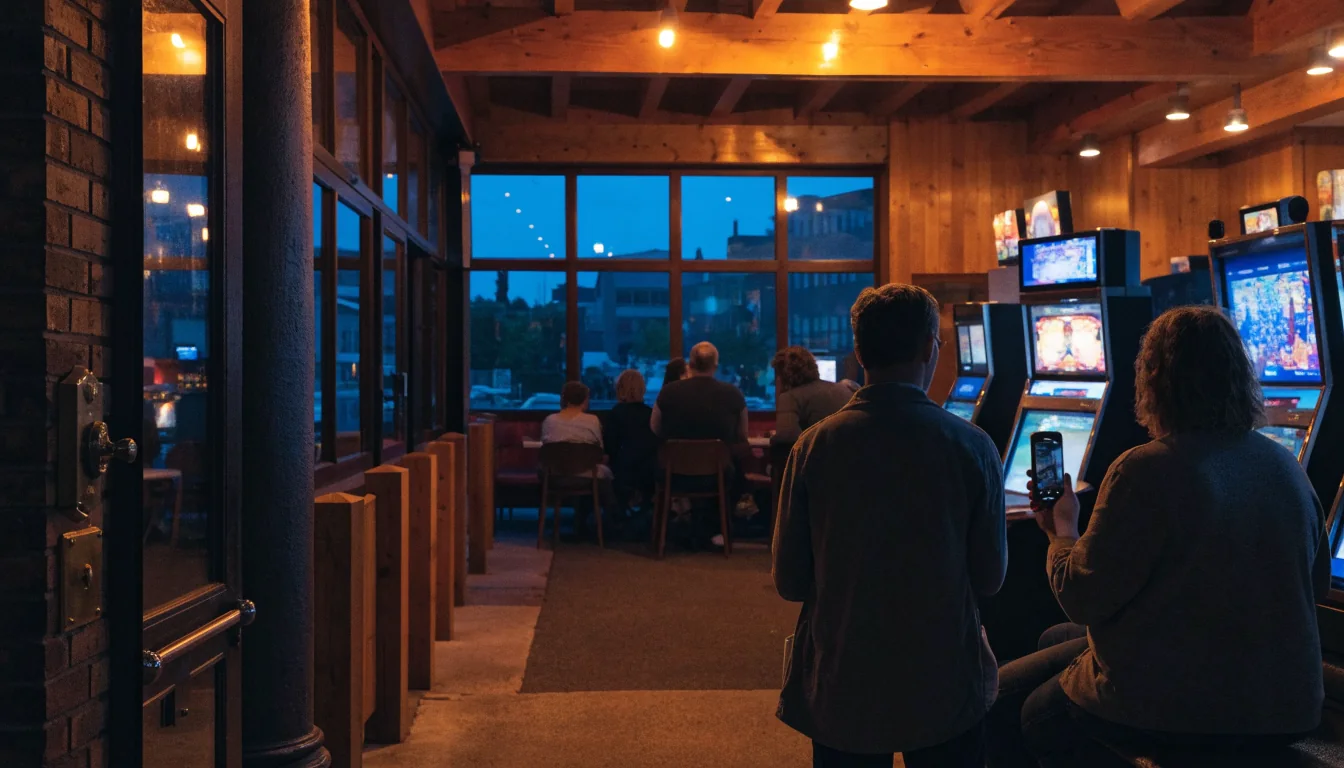
The same caution applies to labels such as “best pokies in Tasmania”. “Best” may reflect someone’s preference or a feature they value; it does not establish that a machine is more likely to pay. Without reliable, comparable information about the specific machine and its settings, a ranking cannot tell you what your session will return. Even where information is precise, it cannot predict an individual spin.
A useful rule is to distinguish three things: what the machine permits, what its rules say, and what a random spin produces. The first two can be checked before play; the third is not knowable in advance. Set a spending limit before you start, and do not treat a run of results as evidence that the next one is owed.
Online Pokies Searches and the Limits of Australian Consumer Protection
An online service does not become an Australian casino because it is accessible from Tasmania or uses local-sounding language. There is no Australian-licensed online casino. The Interactive Gambling Act 2001 prohibits operators from providing real-money online casino games to people in Australia, including pokies. That legal position is separate from the rules and services that apply when you visit a physical venue.
This distinction matters when you see claims about online pokies available to Tasmanian players, supposedly high-paying games or unusually large stakes. Such claims do not establish that an operator is licensed in Australia, that its games have a particular return setting, or that its payment and withdrawal terms are dependable. A website’s description of itself is not a substitute for Australian consumer protection.
The key practical risk is what happens if there is a dispute. If an offshore casino refuses to pay winnings, Australian players have no legal recourse in Australia to recover them. That leaves you without the domestic consumer remedy a person might expect when dealing with an Australian-licensed service. A payment method, a polished website or customer support contact does not remove this limitation.
The law targets operators that provide prohibited services, rather than making an individual player criminally liable simply for playing on an offshore site that accepts them. That does not make the service Australian-regulated or give you a local route to resolve a payout dispute. Legal responsibility and consumer protection are different questions: the absence of player liability does not create a guarantee that an offshore operator will honour its terms.
Search results can also blur the difference between a physical pokies venue and an online gambling service. A venue in Tasmania is a place you can visit; a remote site is operated under a different arrangement and does not acquire an Australian licence because it names a Tasmanian location or welcomes Australian customers. Claims about access from near a town centre likewise say nothing about whether the service is lawful or whether a disputed withdrawal can be pursued locally.
Before treating any online offer as a practical option, identify what kind of service it is and what protection actually applies. For real-money online casino play, there is no Australian-licensed provider to verify. If an offshore site withholds winnings, the absence of Australian legal recourse is a material risk, not a technical detail in the terms. Avoid treating promotional language or apparent access as evidence of oversight.
CBD Clubs and Gambling Incident Records
If you are comparing clubs or other venues in a Tasmanian CBD, a venue name or a reference to pokies does not tell you what machines are available or what support is provided. Treat venue information as a starting point, then confirm the details with the venue before making plans. A list of clubs cannot establish which locations currently operate pokies.
A separate question is how a venue responds when gambling causes concern. A report published by regionriverina.com.au describes a requirement for venues to keep a gambling incident register. The register is intended to record details of occurrences, including situations where a patron’s behaviour indicates that they may be at risk of gambling harm or already affected by it. This is a record of incidents, not a measure of a venue’s machine performance or a promise that harm will be prevented.
The distinction matters when you assess claims about a club. A register can document that a concern arose, but its existence does not show how often incidents occur, how they are handled in practice, or whether a particular venue has a suitable response for your circumstances. Avoid treating a general statement about record-keeping as evidence that every club offers the same support.
If you want to avoid gambling, self-exclusion is a responsible-gambling tool to consider. Check directly with the relevant venue or an appropriate support service to establish what options apply and how they work. Do not assume that a club’s general pokies information explains the conditions for self-exclusion or whether it covers other venues.
When contacting a club, ask a specific question: whether it operates pokies, what support is available if gambling becomes difficult to control, and how to access that support. A clear answer is more useful than a broad label such as “pokies club”. If you are concerned about your own gambling, setting a limit or seeking help before visiting can prevent the venue decision from becoming the only point at which you consider your options.

Cashless Pokies Searches and PayID
Looking for cashless pokies in Tasmania does not tell you which venues, if any, let you play machines without cash. A search result may use “cashless” to describe payments at a venue generally, rather than the way its pokies accept funds. Before relying on that description, ask the venue directly whether cashless play is available on the machines and what process it uses. The same distinction applies when looking for pokies around Newcastle, Tasmania: a location or venue description does not establish how machine payments work.
PayID is not a type of pokie or a cashless gaming feature. It is an alias attached to the New Payments Platform (NPP), which lets someone direct a bank transfer using an email address, mobile number or Australian business number (ABN) instead of entering bank account details. The alias identifies where a transfer should go; it does not itself hold money or determine what a recipient offers.
That mechanism can be useful for understanding a payment instruction, but it should not be confused with proof that a venue supports cashless machine play. Nor does a PayID option establish that an online gambling service is licensed, lawful to provide in Australia or available to Australian residents. Payment plumbing and gambling authorisation are separate questions: one concerns how funds are transferred, the other concerns whether a service may be offered.
If you are checking a venue, ask specifically about its in-person machine payment arrangements. If you encounter PayID in an online gambling context, treat it only as a transfer method, not as a signal of regulatory status or consumer protection. In Australia, there is no Australian-licensed online casino, so the presence of a familiar payment method does not change the legal position or provide Australian recourse if an offshore operator withholds winnings.
Are online pokies legal for Australian players?
Yes, Australian players can play on offshore sites that accept them, but no Australian-licensed online casino exists. If an offshore casino refuses to pay your winnings, you have no legal recourse in Australia.
What is the legal age for online gambling in Australia?
You must be at least 18 years old to gamble online in Australia.
Do PayID deposits qualify for bonuses?
Yes, PayID is treated like any other qualifying deposit method at the recommended sites.
Written by the editors at Kingmaker Casino.