
Understand the odds and check venue details
A practical guide to how pokie outcomes and return settings work, what venues must provide, and the legal context for play in South Australia.
Table of Contents
- How Pokie Outcomes and Return Settings Work
- When Gaming Machines Can Operate—and What Venues Must Provide
- Checking Pokies Near the Airport or CBD
- Online Play, Deposits and the Australian Legal Position
- What to Check About South Australian Pokies Venues
- Are Any Pokies Venues Open 24 Hours?
- What Can Be Verified About Crown and South Australia?
- CBD Clubs, Age Limits and Responsible Gambling
- Cashless Pokies and PayID Are Not the Same Thing
- South Australian Pokies: Regulatory Context
How Pokie Outcomes and Return Settings Work
A pokie’s result is generated separately for each spin. A Random Number Generator (RNG) produces the value that determines the outcome, and the next spin is not a continuation of the last one. A win does not make another win more likely, and a run of losses does not mean a win is due. The machine has no memory that can make an individual result predictable from the sequence before it.
This independence matters when you assess claims about the best-paying pokies in South Australia. A session can contain several wins close together or a long stretch without one. Neither pattern, by itself, tells you what the next spin will produce. The same applies if you stop and return later: the earlier results do not change the random process for a new spin.
What a return setting describes
Return to player, usually shortened to RTP, describes a game’s theoretical return across a very large number of spins. It is a way to express the relationship between total wagers and payouts over an extended run, not a promise about what an individual player will receive. Your own results over a short session can differ substantially from that long-run measure.
If you’re looking for pokies options in South Australia in 2026, this list gives you a concise reference to the available operator details. Check the information relevant to you before choosing where to play.
-
Neospin
- License
- Curacao Gaming Control Board OGL/2023/176/0095 (Hollycorn N.V.)
Neospin is listed with a Curacao Gaming Control Board licence, number OGL/2023/176/0095, held by Hollycorn N.V.
-
WinSpirit Casino
- License
- Curacao eGaming OGL/2024/923/0383 (Antillephone N.V.)
- Min. deposit
- A$30
WinSpirit Casino lists a Curacao eGaming licence, number OGL/2024/923/0383, held by Antillephone N.V. Its minimum deposit is A$30.
-
GoldenCrown
- License
- Curacao Gaming Control Board OGL/2023/176/0095 (Hollycorn N.V.)
GoldenCrown is listed with a Curacao Gaming Control Board licence, number OGL/2023/176/0095, held by Hollycorn N.V.
-
Ricky Casino
- Payout speed
- crypto under 1 hour, PayID 1-3 business days
- Min. deposit
- A$20 (A$30 to qualify for the bonus)
Ricky Casino lists crypto payouts in under an hour and PayID payouts in 1–3 business days. The minimum deposit is A$20, or A$30 to qualify for the bonus.
-
Golden Pokies
- License
- Curacao
Golden Pokies is listed with a Curacao licence.
-
SkyCrown
- License
- Tobique Gaming Commission
- Payout speed
- crypto ~10-15 minutes, fiat 1-5 days
- Min. deposit
- A$30
SkyCrown lists a Tobique Gaming Commission licence. Its stated payout times are around 10–15 minutes for crypto and 1–5 days for fiat; the minimum deposit is A$30.
-
Kingmaker
- Payout speed
- crypto ~90 minutes, fiat 1-5 days
- Min. deposit
- A$30
Kingmaker lists crypto payouts in around 90 minutes and fiat payouts in 1–5 days. Its minimum deposit is A$30.
-
SpinsUp
- License
- Curacao Gaming Control Board OGL/2023/174/0082 (Dama N.V.)
SpinsUp is listed with a Curacao Gaming Control Board licence, number OGL/2023/174/0082, held by Dama N.V.
-
JeetCity Casino
- License
- Curacao eGaming (Dama N.V.)
JeetCity Casino is listed with a Curacao eGaming licence held by Dama N.V.
-
Wild Tokyo
- License
- Curacao
- Payout speed
- crypto 30-60 minutes, fiat 1-5 days
- Min. deposit
- A$10
Wild Tokyo lists a Curacao licence. Its stated payout times are 30–60 minutes for crypto and 1–5 days for fiat; the minimum deposit is A$10.
A specialist review reports that some game providers allow casinos to select among different RTP settings for the same pokie. If that applies to a particular game, the title alone does not establish which return setting is in use at a given venue. The same named game could therefore have different theoretical return percentages at different casinos. A comparison needs to identify the setting, not simply match the game’s name.
RTP also does not tell you when a payout will occur. It cannot be used to calculate a reliable outcome for your next spin, or to infer that a machine is about to pay because it has not paid recently. It describes an aggregate property of the game configuration, while each spin remains its own random event.
Why one session can look unlike the return figure
A long-run measure can be difficult to recognise in a short visit. Imagine that a game’s outcomes were observed over a very large number of spins: the resulting aggregate could align with its return setting, while an individual player’s session could be above or below it. That difference is not evidence that the next result is compensating for earlier ones.
The distinction is between an expected pattern across extensive play and the particular sequence you experience. A return setting does not divide payouts evenly among players or sessions. It does not mean that each person will receive the same proportion of their wagers, and it does not specify how often wins appear or how large any particular win will be.

For that reason, a single player’s result cannot establish a game’s RTP. A short winning run does not prove that a setting is generous; a losing run does not prove that it is poor. To compare theoretical returns, you need information about the game’s configured setting. To understand your own result, you can only describe what happened in that session.
Comparing games and venues
When you see the same pokie at different casinos, separate three things: the game title, its configured return setting, and the results of individual spins. The title identifies the game, but may not reveal the setting. The setting describes a long-run theoretical return, but cannot forecast a particular session. Individual results are what you experience, but they do not establish the game’s long-term return.
This is why labels such as “best pokies” or “best paying” need a defined basis. If the comparison is about return, the relevant detail is the RTP setting in use—not a recent payout, a player’s account of a lucky session, or the fact that a game is familiar. Even a higher theoretical return would not guarantee a win, remove the possibility of losing, or make the next spin predictable.
For South Australian players, the practical point is to treat each spin as uncertain and to avoid using past outcomes as a forecast. If return information is provided for a game, check what setting it refers to and whether it applies to the particular casino configuration. Without that connection, a percentage attached to a game name may not describe the setting you are actually playing.
The mechanics do not change because a pokie is in a CBD venue, elsewhere in South Australia, or described as a casino game. The RNG determines a new result on each spin; the return setting, where configurable, describes the game’s theoretical long-run return. Those are related parts of how the game is specified, but neither tells you what will happen on your next turn.
When Gaming Machines Can Operate—and What Venues Must Provide
A venue’s opening time and the period when its pokies may operate are related, but they are not automatically the same thing. A venue can be open for other services while its gaming machines are not operating. To establish whether pokies are available at a particular time, you need current information from that venue; a general statement about venue opening hours does not, by itself, confirm machine operation.
No statewide opening schedule can be inferred from the responsible-gambling requirements reported for venues. In particular, those requirements do not establish that machines can operate at an early hour, late at night or continuously. If you are planning a visit, contact the venue and ask specifically whether its pokies will be operating at the time you intend to arrive. This avoids treating the venue’s general opening status as confirmation that the machines are available.
Who must be on duty while machines operate
A report by regionriverina.com.au describes a requirement taking effect from 1 July: a venue operating more than 20 gaming machines must have a dedicated responsible gambling officer (RGO) on duty during machine operation. The threshold concerns the number of machines at the venue, while the duty requirement is tied to the hours in which those machines are operating.
That distinction matters when considering a venue’s schedule. The reported requirement does not set the venue’s opening or closing time; it specifies a staffing responsibility during machine operation for venues above the threshold. Nor does it establish that every venue has the same operating hours. A venue’s own current schedule remains the relevant information when you need to know whether its pokies are operating at a particular time.
The same report describes a one-month grace period for venues to remove signage and put responsible gambling officers in place. This is a transition period associated with the reported changes, not a general extension of machine operating hours. It should not be read as evidence that a venue’s machines are open during any particular part of the day.
The practical effect of an RGO requirement is that a qualifying venue must have a designated person responsible for this role while machines are in operation. A visitor should not infer from the presence of staff elsewhere in a venue that the RGO is on duty, or assume that the RGO’s role means machines are available. Staffing and operating status are separate questions.
Recording gambling-related incidents
The report also describes a requirement for venues to keep a gambling incident register. The register is intended to capture occurrences connected with gambling harm, including situations where a patron’s behaviour indicates that gambling may be affecting them or placing them at risk.
This record-keeping obligation is different from simply having an RGO present. The officer requirement concerns designated oversight during machine operation at venues above the stated machine threshold; the register concerns recording relevant incidents. Together, these measures describe venue responsibilities, not a promise that a particular venue will be open or that its machines will be operating when you arrive.
If you need to check a venue’s status, ask two direct questions: whether the venue itself is open, and whether its pokies are operating at that time. For a venue with more than 20 machines, you can also ask how it provides the responsible gambling officer coverage described in the report. The answers should be specific to that venue and date rather than based on assumptions about South Australian venues as a whole.
The reported requirements also do not indicate a particular payout percentage for machines at any venue. Operating hours, staffing arrangements and incident recording describe how a venue manages its premises; they do not tell you the return setting of an individual pokie. Treat those as separate matters when checking information about a venue.
Checking Pokies Near the Airport or CBD
A request for pokies near an airport, a central business district or your current location is only useful once the place is clear. South Australia covers a large area, and a broad search can return results that are not close to the point you have in mind. Treat a map result as a lead to check, not as confirmation that a venue has gaming machines or that it is conveniently located.

Start by specifying the actual airport, suburb or CBD you mean. “Near the airport” can refer to different terminals, nearby suburbs or a wider travel area; “near the CBD” depends on which city centre you have in mind. If you are travelling from interstate, include the South Australian town or suburb rather than relying on a state name alone. This also helps distinguish South Australia from similarly named places elsewhere, including Victoria, and avoids mixing up a regional place such as Parkes with a South Australian destination.
When you use a map or directory, check the venue’s full street address and its position relative to your intended starting point. A pin can appear nearby at a zoomed-out scale while being an inconvenient trip on the ground. Look at the route itself and the transport option you plan to use; a straight-line distance does not show the actual path. If you are already in the area, using your current location can narrow results, but confirm that the location setting is pointing to the right place.
A listing for a club, hotel or other venue does not by itself establish that pokies are available there. Before travelling, contact the venue directly and ask whether it has gaming machines and whether they are accessible to visitors. That simple check is more dependable than inferring machine availability from a venue category, a photo, an old directory entry or a map label. If a listing provides conflicting addresses or details, use the venue’s own contact channel to resolve them before setting out.
Do
- Specify the actual airport, suburb, or CBD
- Check the full street address and route
- Confirm machine availability with the venue
Don't
- Rely on a statewide search alone
- Treat a map pin as a guaranteed proximity
- Infer availability from a venue category or photo
For airport-related plans, check the destination address rather than assuming that a result described as “near” the airport is on airport grounds or within easy walking distance. For a CBD visit, identify the specific part of the centre you will be in and check how the venue relates to it. “Central” is not a precise location, and results can change depending on the map’s search area. If you mean northern South Australia or a regional town, enter that town or locality explicitly rather than relying on a statewide search.
Searches made from different starting points can produce different nearby results. Check that the map has not retained an earlier location, and compare the address shown in the listing with the destination entered into your navigation tool. If you are travelling with limited time or need a particular route, confirm the details directly before leaving; a search result alone cannot tell you whether the trip suits your plans.
The useful sequence is simple: name the exact area, inspect the address and route, then confirm machine availability with the venue. That keeps location results in their proper role: a way to identify places worth checking, not proof of what facilities they offer.
Online Play, Deposits and the Australian Legal Position
A website may display pokies to people in South Australia, but that does not mean it is authorised to provide real-money play here. Under the Interactive Gambling Act 2001, companies cannot offer real-money online pokies to people in Australia without a domestic licence. No such licences have been issued, so there is no Australian-licensed online casino.
The legal boundary applies to the operator providing the service. It does not make an individual player liable merely for using an offshore site that accepts Australian customers. That distinction is important: a player’s lack of personal liability does not make the service locally licensed or give the player the protections available through an Australian-licensed casino.
The practical risk becomes clearer if a site disputes a balance or refuses a withdrawal. Australian players have no legal recourse in Australia to recover winnings from an offshore casino. A site may describe its own complaint process or refer to an overseas regulator, but that does not create an Australian route for enforcing payment. Before depositing, consider what you could do if the operator stopped responding; a displayed balance is not the same as money you can reliably recover.
Deposit offers do not change this position. A no-deposit promotion, a large maximum bet, or claims about high-paying pokies cannot establish that a site is authorised to serve Australian customers. Nor does an attractive offer resolve questions about withdrawal conditions. Read the operator’s terms carefully, including how it defines eligible play and what conditions apply before funds can be withdrawn. Do not treat a promotion as evidence of protection or a likely return.
Depositing money also does not guarantee that you can withdraw it without further checks. A specialist review reports that offshore casinos may ask for identity verification before a first withdrawal. This can involve a photo of your identity document and proof of address, with some operators also asking for a selfie holding the document. Requirements can differ between sites, so check them before depositing and consider how you will provide the requested information securely.
The same caution applies if you search for online pokies available near South Australia: an online service is not a local venue, and a South Australian address does not make an offshore operator domestic. A website’s accessibility, familiar payment options, or use of local currency does not establish an Australian licence. The central question is who provides the gambling service and whether that operator holds the domestic licence required by law.
For a real-money deposit, you are sending funds to an offshore operator without the protection of an Australian-licensed online casino. If a payment is accepted, that only confirms that the transaction went through; it does not show that the site is authorised or that a future withdrawal will be honoured. Treat deposit decisions and withdrawal checks as separate steps, and do not risk money you cannot afford to lose.
What to Check About South Australian Pokies Venues
A “best” venue is not a measurable category unless you decide what matters to you. The number of machines, the games available and the facilities on site are separate questions, and a claim about one does not establish anything about the others. Treat promotional descriptions as claims to check, not as evidence that a venue is better for every visitor.
For a useful comparison, look for current, venue-specific information and confirm details directly with the venue. Check that the information refers to the particular South Australian location you are considering; a group’s general description may not apply to every site. If a detail matters to your decision but is not clearly stated, ask the venue rather than infer it from photographs, reviews or a broad description of its gaming area.
Machine information also needs to be specific. A venue’s stated machine count does not tell you which games are installed, and a game name alone does not establish its settings or likely results. Do not treat a list of popular titles, a customer rating or a claim about a “top” gaming room as a verified comparison of machines. Those measures answer different questions, and none establishes that you will win.
When comparing facilities, separate what can be confirmed from what is opinion. Opening times, access arrangements and available services can change, so check the venue’s current information before travelling. A review may describe one visitor’s experience at a particular time; it cannot guarantee the same conditions on your visit. For CBD clubs, the same distinction applies: a club’s location or general description is not proof that it has pokies.
There is also a venue-level safeguard worth asking about. A report by regionriverina.com.au describes a requirement for venues to keep a gambling incident register. The register is intended to capture details of incidents, including situations in which a patron’s behaviour suggests they may be at risk of gambling harm or already affected by it. This is a record-keeping measure, not a rating of the venue and not a promise that harm will be prevented.
If you are assessing how a venue responds to concerns, ask what process staff follow when they notice signs of gambling harm and how a patron can raise a concern. A register can document an occurrence; it does not, by itself, show what support was offered or how a particular situation was handled. Keep those questions separate when judging a venue.
A reliable comparison therefore depends on current details tied to each individual location, rather than a broad “best pokies venue in South Australia” label. Check claims against the venue’s own information and ask for clarification where the wording leaves room for interpretation. No ranking can replace that location-specific checking.
Are Any Pokies Venues Open 24 Hours?
A South Australian venue’s opening hours and the hours when its pokies are available are not necessarily the same thing. A venue might be open while gaming machines are not operating, so a general “open” label does not establish that you can play pokies at that time.
For an “open now” check, rely on information that specifies both the venue’s current status and its gaming-machine hours. Check the venue’s own current notices or contact it directly, particularly if you are planning a late-night or early-morning visit. Confirm the date as well: hours shown in an older listing may not reflect current arrangements. If the information only gives the venue’s overall trading hours, it does not answer when its pokies are operating.
This distinction matters when interpreting claims about 24-hour pokies in South Australia. The phrase could refer to a venue staying open all night, but that alone does not prove its machines are available throughout that period. Conversely, a venue’s daytime hours do not tell you whether machines operate for every minute that the venue is open. Treat the machine schedule as a separate detail to confirm.
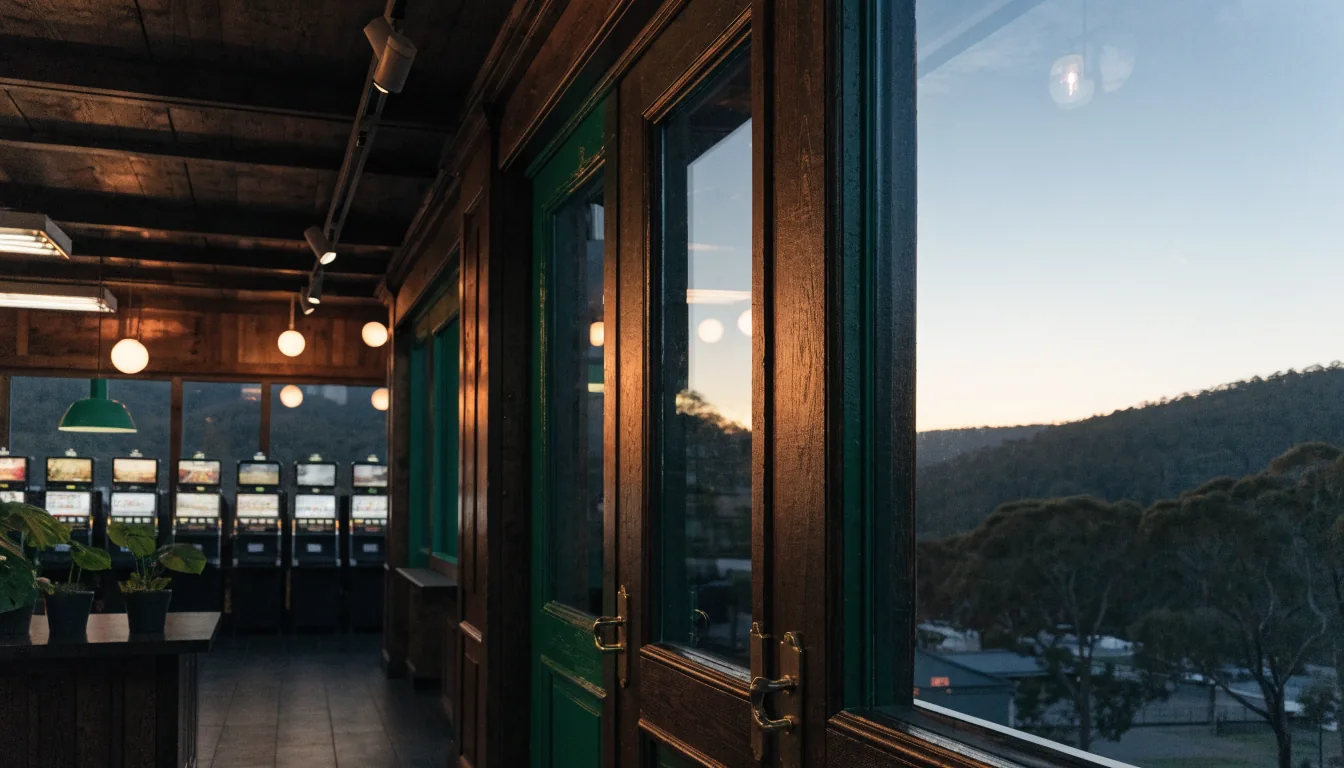
There is also an oversight requirement tied to machine operation. A report published by regionriverina.com.au says that, from 1 July, venues operating more than 20 gaming machines are required to have a dedicated responsible gambling officer (RGO) on duty while those machines are running. The condition concerns the period when the machines operate; it does not establish that a venue is open at a particular hour, or that it may operate pokies continuously.
When checking a claimed 24-hour venue, ask specifically whether the pokies themselves are operating at the time you intend to visit, not merely whether the doors are open. If you cannot confirm that detail, do not treat the venue as a confirmed option for around-the-clock play. That is the clearest way to distinguish a published venue schedule from verified machine operating hours.
What Can Be Verified About Crown and South Australia?
A reference to Crown does not, by itself, establish that a Crown casino operates in South Australia or that a particular South Australian venue has Crown pokies. The name may appear in a question, an online result or a discussion, but those mentions are not proof of a local venue, its machines or its operating arrangements.
If you are checking whether Crown has pokies in South Australia, look for information that identifies the specific venue and confirms its location and operator. Do not treat a venue’s name, an image or a general reference to Crown as confirmation. The same distinction applies to claims about a Crown casino in South Australia: the claim needs to be tied to a particular place, not inferred from the brand alone.
This matters because venue details cannot be transferred from one place to another by name. A statement about a Crown venue elsewhere would not establish what is available in South Australia. Nor would it confirm the machines, facilities or rules at any South Australian venue. Keep each claim attached to the location it actually describes.
The same care applies when people look for the best pokies room in South Australia. A room cannot be assessed from a brand reference alone. You would need current, location-specific information about the venue and the machines there. Without it, a ranking or recommendation would be guesswork rather than a comparison based on confirmed details.
There is also no single maximum cash payout that can be inferred from the words “Crown pokies” or from a venue name. If you are considering a machine, check its displayed game information and ask venue staff how any prize is paid. A headline prize amount, where one is shown, does not by itself explain the payment method or establish a cash limit.
Keep the questions separate: whether a named venue exists locally, whether it has pokies, what machines are available, and how prizes are paid are different claims. Confirmation of one does not automatically confirm the others. For a specific venue, rely on information that names the location and addresses the exact detail you need, rather than treating a Crown reference as proof of South Australian operations.
CBD Clubs, Age Limits and Responsible Gambling
If you are considering gambling at a club in South Australia, check the age requirement first: the legal age for gambling in Australia is 18. This applies to gambling generally, including pokies. A venue may ask you to prove your age, so do not assume that appearance alone will settle the question.

Responsible-gambling tools work by placing limits on access, time or money. A deposit limit sets a ceiling on how much you can put into an account. A loss limit restricts the amount you can lose, while a session time limit helps you stop after a chosen period. Self-exclusion is different: it is an option to prevent yourself from gambling for a period or longer, rather than simply setting a smaller limit.
These tools can help make a decision concrete before you start. For instance, a time limit creates a stopping point that does not depend on whether you are winning or losing. A loss limit defines the amount you are prepared to lose; it does not change the chance of a particular result or ensure that you will recover money already lost. Once a limit has been reached, treating it as a firm boundary is more useful than changing it in response to the session.
If you want to exclude yourself from pokies, ask the relevant venue or gambling provider what process applies and what areas or services it covers. Do not assume that an exclusion arranged with one operator automatically applies everywhere. Confirm how it takes effect and what you need to do if you later want to change or end it.
BetStop is Australia’s national self-exclusion register for licensed wagering services, but it applies only to Australian-licensed operators and does not bind offshore sites. It should not be treated as a substitute for asking a club or venue about its own exclusion arrangements.
- Confirm you are at least 18 years old
- Set a firm deposit or loss limit before playing
- Establish a session time limit
- Identify the venue's specific self-exclusion process
A club setting can make it easier to lose track of time or spending, particularly when you have not decided on a stopping point in advance. Set any limits before play, keep track of elapsed time and leave when your boundary is reached. If you feel unable to follow your own limits, stopping and seeking support is a safer response than increasing them. These safeguards are about controlling access and exposure; they do not make gambling outcomes predictable.
Cashless Pokies and PayID Are Not the Same Thing
Cashless pokies and PayID describe different parts of a transaction. A cashless arrangement concerns how money is loaded onto, used at, or withdrawn from a gaming machine. PayID, by contrast, is a way to address a bank transfer. Treating the terms as interchangeable can lead you to assume that a venue’s machine accepts PayID when the payment method alone does not establish that.
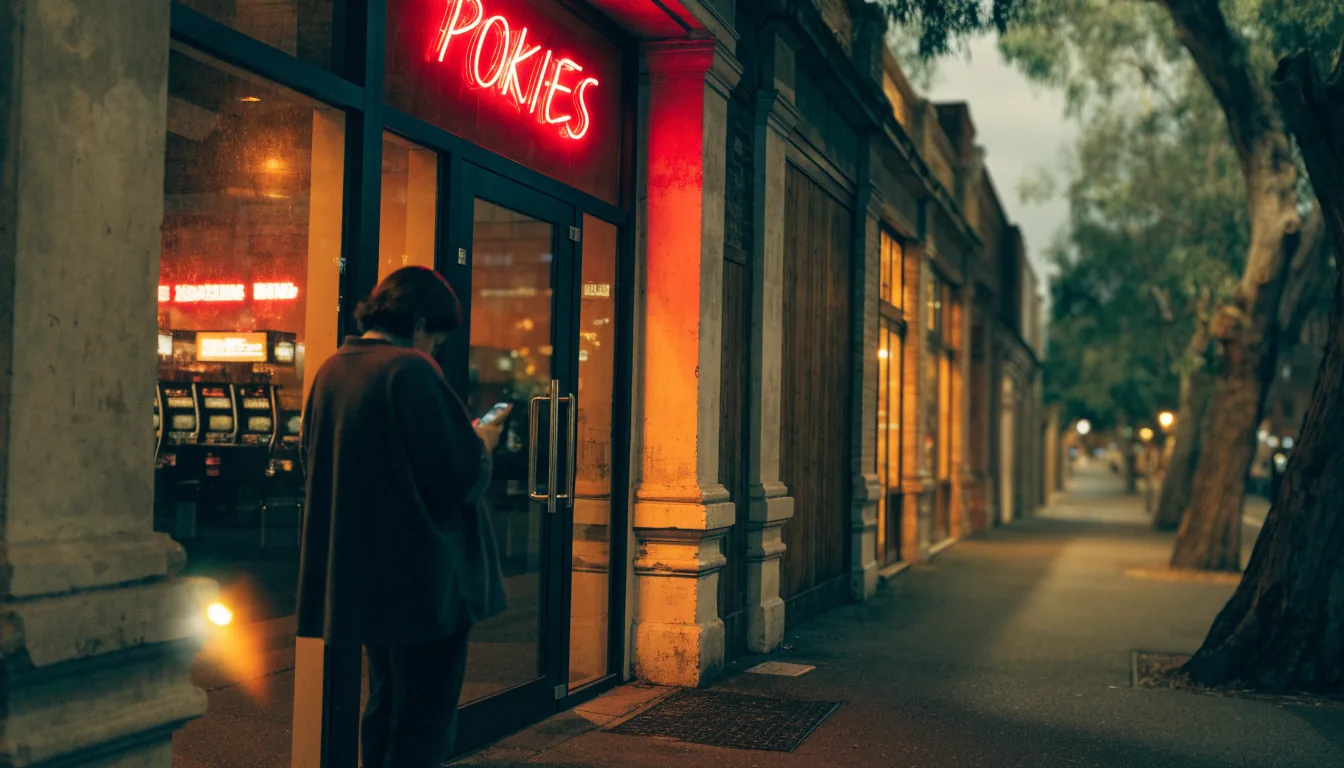
PayID works through Australia’s New Payments Platform (NPP). Instead of entering a bank account and branch number, a sender can direct a transfer using an alias linked to the recipient, such as an email address, mobile number or Australian Business Number (ABN). The alias points the payment to an account; it is not itself a wallet or a gaming-machine feature.
The NPP is available through all major Australian banks, and transfers on the platform use end-to-end encryption. Those properties describe the payment infrastructure. They do not describe the gambling service receiving a payment, or how a particular venue handles funds at its machines.
This distinction also matters when PayID appears as a deposit option on an online gambling site. Seeing the payment method does not establish that the site is licensed, that its games are fair, or that its return settings are disclosed. A transfer mechanism can route money without validating the recipient’s suitability.
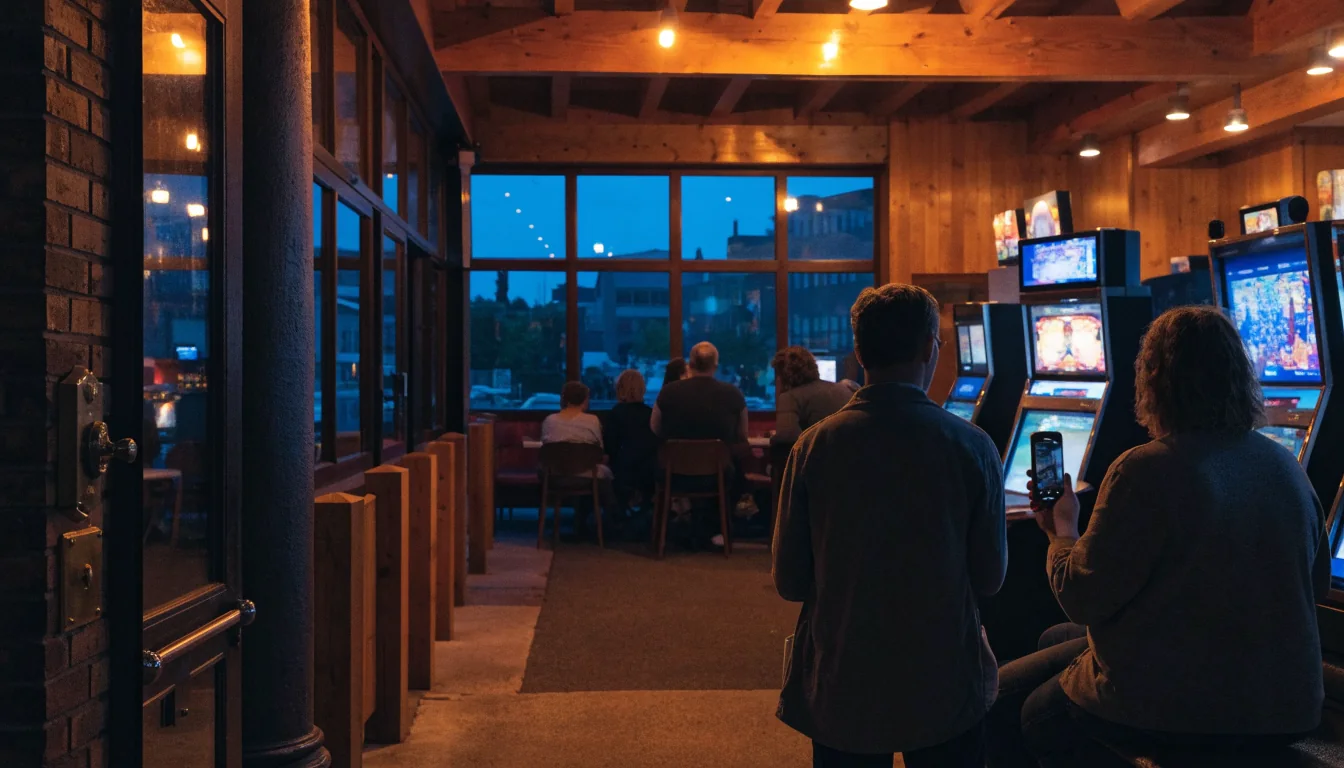
If you are checking whether a South Australian venue offers cashless play, look for information specifically about its machines and payment arrangements. A PayID reference on a separate website is not evidence of what those machines support. Likewise, a cashless machine system does not necessarily mean that PayID is involved: the method used to move money into a bank account and the method a machine uses to handle play are separate questions.
South Australian Pokies: Regulatory Context
For gambling in South Australia, it is important to distinguish regulation of local venues from the national rules governing online services. The Australian Communications and Media Authority (ACMA) is the domestic regulator responsible for enforcing the Interactive Gambling Act 2001. Its role relevant here is to address prohibited online gambling services, not to identify which local venue or pokie is best.
ACMA blocks access to illegal offshore gambling sites. Internet service providers must comply with the regulator’s blocklist, so a site may become inaccessible through an Australian connection. Blocking is an enforcement measure; it does not provide a directory of South Australian venues or assess the quality of pokie machines.

The restriction is directed at services offered by operators. Under the Act, real-money online casino-style games provided to people in Australia are prohibited services when they include pokies and other casino games. No Australian licence is available for an online casino. These rules concern online access and do not, by themselves, establish the operating status of a physical venue in South Australia.
A website’s availability is not a reliable test of whether its service is lawful. A site that still loads may not have been blocked, but that does not make it an authorised Australian online casino. Conversely, a block may prevent access without telling you anything about local gaming machines.
For someone comparing pokies in South Australia, ACMA’s role is therefore a safeguard against prohibited online gambling services, rather than a source of local venue rankings. Keep the two settings separate: national online enforcement concerns operators and access to their services; questions about a particular physical venue require information specific to that venue.
What is the legal age for online gambling in Australia?
You must be 18 or older to gamble online in Australia.
Are online pokies legal for Australian players?
You can legally play on offshore sites that accept Australian players, but companies cannot legally offer real-money online pokies to Australians without a domestic licence, and no such licences have been issued. If an offshore casino refuses to pay you, you have no legal recourse in Australia.
What does “wagering requirement” actually mean?
It is the amount you must bet before you can withdraw bonus-related winnings, calculated using a turnover multiplier. For example, a $500 bonus with a 40x requirement means you must place $20,000 in bets.
What is the cost-benefit calculation of casino promotions?
Compare the bets required to clear the promotion with the bonus and any withdrawal limits. For example, a $500 bonus with a 40x requirement requires $20,000 in bets; if the requirement applies to a $500 deposit plus a $500 bonus at 35x, it requires $35,000 in bets.
Can casinos change the RTP of their games?
Yes. Some providers let casinos choose between multiple RTP settings for the same game, so check the setting in use at that casino rather than relying on the game title alone.
Written by the editors at Kingmaker Casino.